
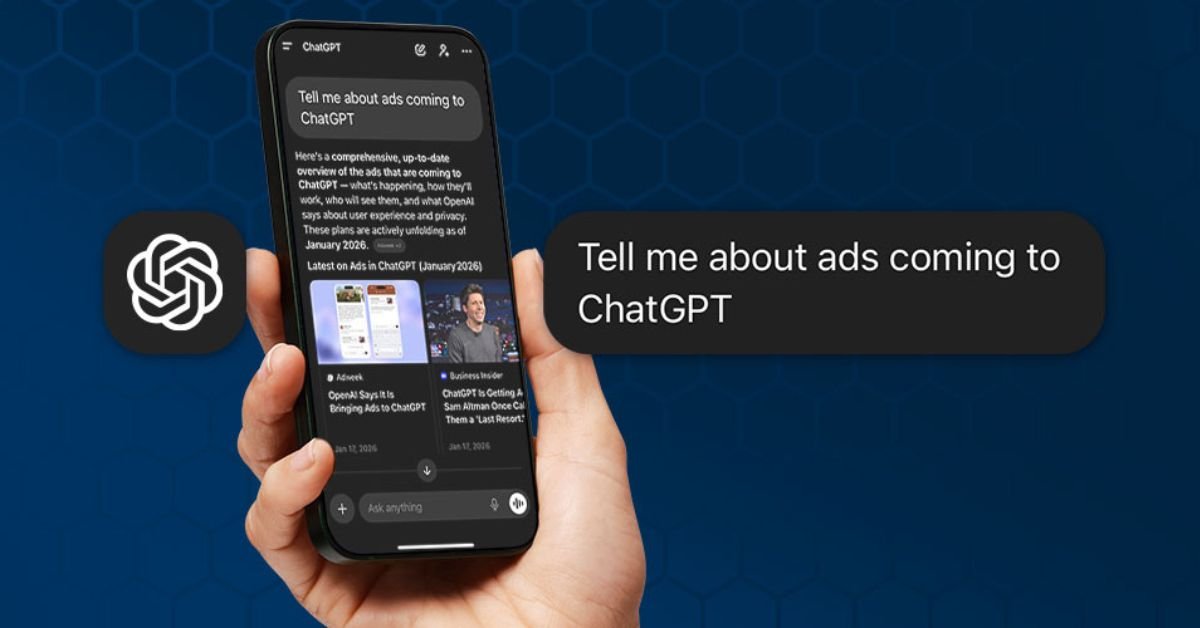
ChatGPT Ads are quickly becoming one of the most talked-about shifts in digital marketing. As AI platforms reshape how people search, ask questions, and make decisions, businesses are starting to explore new ways to advertise directly within these experiences.
The Moment Marketers Have Been Waiting For — and Debating
On February 9, 2026, OpenAI officially began testing advertisements inside ChatGPT, making it the first time businesses could buy sponsored placements inside an AI chatbot at meaningful scale. Within weeks, the pilot had crossed $100 million in annualized revenue, expanded to Canada, Australia, and New Zealand, and dropped its minimum entry threshold from $250,000 to $50,000 with the launch of a self-serve Ads Manager.
Whether you’re excited or sceptical, one thing is clear: conversational advertising has arrived, and businesses that understand it early will have a significant advantage. Here’s what you actually need to know.
How ChatGPT Ads Work
ChatGPT ads are sponsored cards that appear below AI responses when a user’s conversation is relevant to an advertiser’s product or service. They are clearly labelled as sponsored and visually separated from ChatGPT’s actual response.
Key things to understand about the format:
- Ads appear for Free and ChatGPT Go ($8/month) users only. Plus, Pro, Business, Enterprise, and Education accounts have no ads.
- Ads do not influence ChatGPT’s answers — answer independence is a core principle OpenAI has committed to publicly.
- OpenAI does not share user conversation data with advertisers. Targeting is based on the current chat topic, not personal data.
- Ads are currently only reaching users 18+ and do not appear in sensitive topic conversations (health, politics, etc.).
Who Can Currently Advertise on ChatGPT?
Access is currently limited. The initial phase worked with large advertisers and agency holding companies — brands like Target, Adobe, Expedia, Best Buy, and The Knot were among the first confirmed participants. The initial minimum spend commitment was reported at $250,000.
However, as of April 2026, OpenAI has launched a self-serve Ads Manager. Lowering the barrier to entry to approximately $50,000 — and is expanding to more markets including Canada. For businesses interested in being part of the early programme, OpenAI is accepting expressions of interest at openai.com/advertisers.
ChatGPT Ads vs Google Ads vs Meta Ads: Where Does It Fit?
ChatGPT advertising occupies a different position in the marketing funnel than Google or Meta, and understanding this is critical for planning:
- Google Ads captures users with clear purchase intent (“buy running shoes online”). High conversion, high competition.
- Meta Ads captures users during passive content consumption. Strong for awareness, retargeting, and brand-building.
- ChatGPT Ads catches users mid-research — actively comparing options, asking follow-up questions, exploring solutions. This is a unique high-intent, mid-funnel position that neither Google nor Meta can replicate in the same way.
For businesses with products or services that benefit from considered decision-making — professional services, SaaS, B2B, higher-ticket purchases — ChatGPT’s advertising position is potentially very valuable.
What About Businesses That Can’t Afford the Minimum Yet?
This is where the organic strategy becomes critical. Businesses can appear in ChatGPT’s responses without paying for ads — through what’s known as Answer Engine Optimization (AEO) and Generative Engine Optimization (GEO). When your content is structured for AI readability, authoritative, and widely cited across the web. ChatGPT may reference your brand organically at no cost.
This organic presence is not only free — it often carries more trust than sponsored placements because it comes through ChatGPT’s own recommendation rather than an advertisement.
Should Your Business Be Preparing for ChatGPT Advertising?
The self-serve expansion in 2026 signals that ChatGPT advertising will be available to a much broader range of businesses within the next 12 months. Businesses that should start preparing now include:
- SaaS companies and professional service providers whose audiences actively research options on AI platforms.
- B2B businesses targeting mid-funnel decision-makers who compare solutions conversationally.
- Consumer brands with audiences in the 18–34 demographic, which makes up over 54% of ChatGPT users.
Start by building your organic AI presence now — through AEO and content structured for AI citation. This creates brand visibility that works today and positions you to run paid campaigns effectively when access expands.
ChatGPT advertising is expanding to Canada now.
The 6th Avenue is helping forward-thinking businesses across North America build their AI advertising strategy — both organic and paid.