
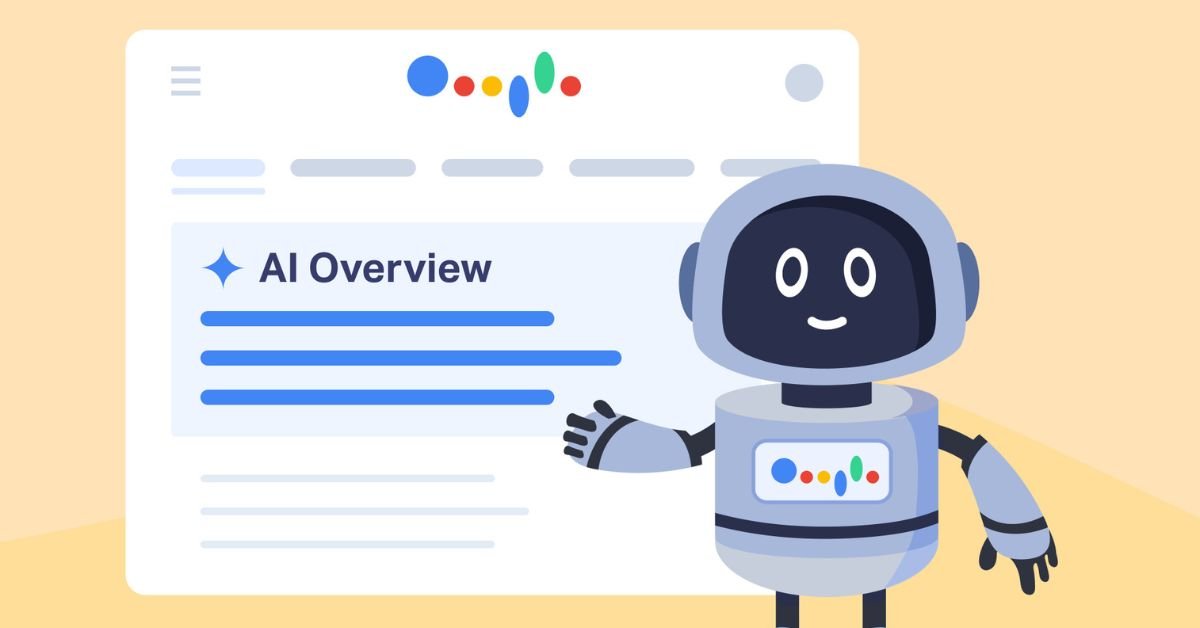
If you’ve been putting all your energy into Google rankings and wondering why your traffic feels flat, there’s a good reason. Search behaviour in 2026 looks radically different from just two years ago — and businesses that don’t adapt are quietly losing ground.
Over 60% of Google searches now end without a single click, according to research from SparkToro. Users are getting their answers directly from AI-powered summaries, voice assistants, and chat interfaces like ChatGPT, Perplexity, and Google’s AI Overviews. Traditional SEO gets you in front of a list of links. Answer Engine Optimization (AEO) gets your brand cited as the answer itself.
What Is Answer Engine Optimization?
Answer Engine Optimization (AEO) is the practice of structuring your content so that AI-powered platforms — including ChatGPT, Google Gemini, and Perplexity — can easily find, understand, and present your brand as a direct response to user queries.
Where traditional SEO targets keywords to rank on a search results page, AEO targets the AI summary layer that increasingly sits above those results, or replaces them entirely. The goal isn’t just a click — it’s a citation, a recommendation, a mention.
Think of it this way: when someone asks ChatGPT “What’s the best digital marketing agency in Toronto?” you want your business to be the answer that comes up — not buried on page four of Google.
Why AEO Matters More Than Ever in 2026
- Gartner predicts traditional search volume will drop 25% by 2026 as users shift to AI chatbots and virtual agents.
- ChatGPT alone reaches over 800 million weekly active users — most of whom never click a traditional search result.
- Businesses cited in AI-generated answers receive traffic that converts at 4.4x the rate of standard organic visitors.
- Only 20% of organizations have begun implementing AEO — which means there is still a massive first-mover advantage available right now.
Early adopters of AEO are capturing 3.4x more AI visibility than late movers. The window to get ahead is open, but it won’t stay open forever.
How AEO Works: The Core Mechanics
AI answer engines use a process called Retrieval-Augmented Generation (RAG) to find, evaluate, and synthesize content from across the web. For your content to be selected, it needs to clear three hurdles:
1. Discoverability
Your website must be technically healthy — fast, crawlable, and properly structured — so AI systems can access your content in the first place. A slow or broken site won’t be cited, period.
2. Understandability
AI engines don’t match keywords — they interpret context, intent, and meaning. Your content needs to answer real questions in natural, conversational language. Q&A sections, FAQ schema, and structured headings all help AI extract what it needs.
3. Trustworthiness
AI systems heavily favour content from authoritative sources. This means strong E-E-A-T signals (Experience, Expertise, Authoritativeness, Trustworthiness), quality backlinks, and consistent brand presence across third-party platforms like LinkedIn, Reddit, and industry publications.
AEO vs Traditional SEO: What’s Different
AEO and SEO are not competing strategies — they’re complementary. Strong SEO feeds directly into AEO performance because AI models pull from the same sources that rank well on Google. The key difference is the goal: SEO drives traffic, AEO builds visibility and trust in a world where many users never click a link at all.
In practical terms, AEO requires you to write content that is directly, clearly, and concisely answering questions — not writing around them. It requires schema markup, structured data, and a content strategy built around what your audience is actually asking AI assistants right now.
What This Means for Your Business
Whether you’re a retailer, a B2B services company, or a nonprofit — your audience is increasingly using AI to find answers, compare providers, and make buying decisions. If your brand isn’t being cited in those conversations, a competitor is.
The good news is that most businesses are not yet optimizing for AEO. The brands that move now will establish citation advantages that become increasingly difficult for competitors to overcome.
Ready to get your brand cited by ChatGPT, Google AI Overviews, and Perplexity?
The 6th Avenue helps businesses across Canada, the US, and Europe build AEO strategies that drive real visibility.